

Default-deny as a compliance posture, not a security one
Default-deny gets framed as a security control. The more useful framing is that it's a compliance posture: every 'yes' becomes a justified positive choice, and every action ties back to a specific allowed-rule the auditor can read.

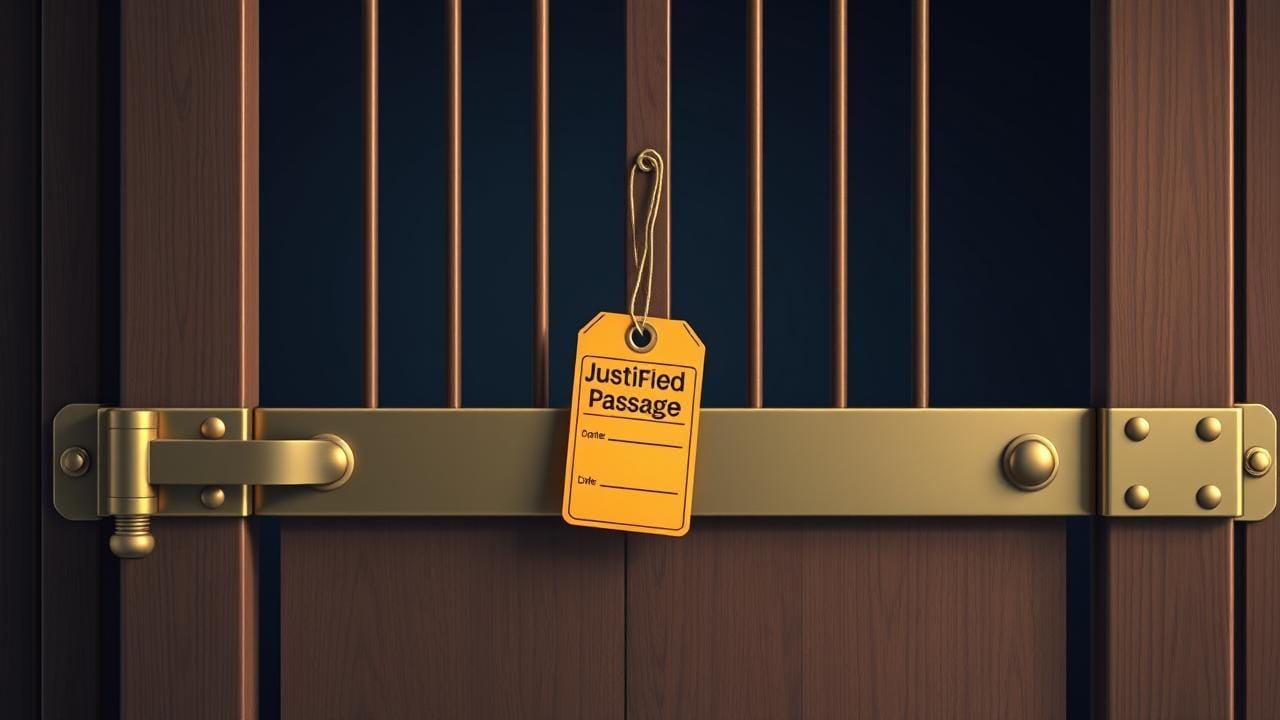
Most of the conversations I've had about default-deny over the years have framed it as a security posture. Lock everything down, open up only what's needed, fail closed. The framing is fine as far as it goes. It's also wrong about the most important thing default-deny actually buys you.
Default-deny is a compliance posture. The security benefits are real, but they're a second-order consequence. The first-order benefit is that every action your platform takes is the result of a specific, justified, human-authored "yes", and that "yes" is traceable, attributable, and reviewable. Default-allow with deny-rules cannot give you that, ever, no matter how thorough the deny-list grows. The two postures look superficially similar from outside. They are different artifacts when an auditor opens them.
This is the reframing I've been pushing in the enterprise AI work all year. It changes how I write policy, how I shape the platform, and (more than anything) how I respond when somebody asks "why is this allowed."
The "yes" is the load-bearing artifact
In a default-allow system, the deny-rules are the load-bearing artifact. Everything is permitted except the things plainly forbidden. The auditor's question ("show me why this action was allowed") has no good answer, because the action wasn't allowed by anything in particular. It was allowed by the absence of a deny. The audit trail says "we couldn't find a rule that prohibited it." That is not the same answer as "rule R-417 allowed this. Here's the rule. Here's who approved it. Here's when it was last reviewed."
In a default-deny system, the allow-rules are the load-bearing artifact. Nothing is permitted except what's plainly enumerated. Every action that fires on the platform fires because some rule said yes. That rule has an author, a review date, a justification, and an owner. The audit trail says exactly which rule was satisfied, with which inputs, by which subject. The auditor's question gets a sentence. Not a paragraph of caveats.
The difference matters most for AI workloads, because AI workloads do things that the human writing the policy didn't anticipate. A model picks a tool. An agent constructs a query. A pipeline routes a request to a downstream service the original architect didn't draw on the diagram. In a default-allow posture, all of those novel actions execute, and you find out about them when they break something or when somebody asks why they happened. In a default-deny posture, the novel actions hit the policy, the policy returns no, and you discover the gap before it becomes a story you tell on a postmortem.
This is the HIPAA-shapes-the-system argument from a different angle. The compliance regime cares about positive answers, "this access was allowed because the user was a clinician with a treating-relationship to this patient, and the purpose was treatment." A default-allow system cannot manufacture that sentence. A default-deny system has it built in.
What flipping the platform actually changes
I've watched a few teams make this flip. It's not a config change. It's a re-shape of the platform across two layers (policy and operations) that compounds into how the team works day-to-day. Both layers have to move together; doing one without the other produces a system that nobody trusts.
At the policy layer
The policy layer is the obvious half. The mechanics are familiar to anyone who's used OPA or Cedar or any of the modern decision engines.
In a default-allow shape, the policy is a sequence of guards: if X then deny, if Y then deny, if Z then deny, else allow. The shape grows monotonically, every new threat or new compliance requirement adds another guard. The policy is a moat that gets dug deeper every quarter. Reasoning about whether a specific request will be allowed requires walking the entire deny-list and finding nothing that matches.
In a default-deny shape, the policy is a sequence of permissions: if A and B and C then allow, if D and E and F then allow, else deny. The shape is enumerative, every supported workflow has a corresponding allow-rule. Reasoning about whether a request will be allowed requires finding the allow-rule that covers it. If no rule covers it, the answer is no, and the policy itself tells you which rule would need to exist for the answer to be yes.
The audit posture this enables is qualitatively different. Pull a sample of allowed actions over the last quarter and the auditor can ask, for each one: which rule fired, what were the inputs, who approved that rule, when was it last reviewed. Every column in that table has an answer. In the default-allow shape, the analogous columns are blank or hand-waved.
The OPA Gatekeeper piece covered the K8s admission-controller version of this. Gatekeeper, by default, allows everything that no constraint rejects. That's a default-allow shape at the cluster layer. The discipline of writing constraints that enumerate the allowed shapes rather than enumerate the forbidden ones is the operational move that pulls Gatekeeper toward default-deny. It's the same engine, used in the inverted shape. The compliance posture changes; the tool doesn't.
At the operational layer
The operational layer is the half that bites teams that try the flip without thinking it through. Default-deny, applied without operational support, produces a platform where every new request is a ticket and every new workflow is a six-week negotiation. That's not the goal. The goal is a platform where the supported workflows execute frictionlessly and the unsupported ones surface fast, with clear escalation paths.
What I've seen work, across the AI platform work this past year:
- The allow-rule catalog is a product. The list of allowed actions is documented, browsable, and discoverable. A developer who wants to do a thing should be able to find the allow-rule that covers it in under a minute, or determine that no such rule exists and file a request. Default-deny without a catalog is just default-friction.
- Allow-rule requests have an SLA. "Add a new allowed-action" is a workflow with an owner, a review process, and a turnaround time. If adding a new allow-rule takes a quarter, the platform fails. If it takes a day for low-risk additions and a week for high-risk ones, the platform works.
- Denials produce structured feedback. When the policy denies an action, the response includes which rule the action would need to satisfy, who owns the request process, and a link to file the request. A bare 403 is operationally hostile; a 403 with a path forward is operationally functional.
- The audit posture is a first-class output. The same allow-rule catalog that serves the developer also serves the auditor. The auditor's report is largely "here are the allowed actions, here are who authored each rule, here is the evidence that each rule is being applied as written." That report is a query, not a quarter-long fire drill.
The operational layer is what makes the policy layer livable. Without it, default-deny is the policy a team adopts in panic and abandons in frustration. With it, default-deny is the policy a team adopts on purpose and keeps because it makes the audit posture trivially defensible.
What the auditor sees
The litmus test for whether the flip has actually happened is the conversation with the auditor.
In the default-allow shape, the conversation goes: "show me the policies that prevent unauthorized access." You produce the deny-list. The auditor reads it, asks about the gaps, and the conversation becomes about what the deny-list doesn't cover. Every quarter the deny-list grows; every quarter there's a new question about a new gap.
In the default-deny shape, the conversation goes: "show me the policies that authorize the actions your platform takes." You produce the allow-list. The auditor reads it, asks who authored each rule, when it was last reviewed, and what evidence you have that the rule is being enforced. The conversation becomes about provenance and review cadence, not about gaps. The allow-list doesn't grow indefinitely; it grows when a new workflow gets supported, and the new entry has an author and a date.
The second conversation is the conversation a Decisions as Code shop should want. Every entry in the allow-list is a decision, made once, by the right people, projected onto the policy engine, traceable in the audit log. The approach is the same one that governs t-shirt sizing and naming standards and tagging conventions. The foundation is different (a policy engine instead of a Helm chart) but the discipline is identical.
When default-allow is actually defensible
I want to be honest about where default-allow holds up. There are systems where the surface of legitimate actions is too large or too uncertain to enumerate, and where the cost of a false denial exceeds the cost of a false allow. Public-facing read-only APIs are often in this category. Internal developer tools in early exploration are sometimes in this category. The framing isn't "default-deny everywhere always."
The framing is: when the system is compliance-applicable, when an auditor will eventually ask "show me why each of these actions was permitted", default-deny is the only posture that produces a defensible answer. That covers most of the AI platform work I see in regulated environments now. PHI-touching systems. Financial-data systems. Anything that handles GDPR-scoped personal data. Anything where the regulator will eventually want a positive justification rather than the absence of a prohibition.
For those systems, the flip is not optional. It's just a question of whether the team makes it on day one or six months in, after the first audit conversation goes badly.
The mindset shift
The shift the teams I've worked with this year have made is from thinking about policy as what we forbid to thinking about policy as what we authorize. The first framing produces a list that grows whenever something bad happens. The second framing produces a list that grows whenever something useful gets supported. The first framing makes the auditor's job adversarial. The second makes it administrative.
If you're operating in a compliance-applicable environment and your policy still reads as "permit unless prohibited," the flip is the cheapest single change you can make to your audit posture this year. The policy engine is the same. The operational tooling needs work. The mindset shift is the load-bearing one, once the team starts thinking of every yes as a positive choice, the rest follows.
Default-deny isn't a security posture. It's a compliance posture. The security benefits come along for free, but they're not the reason to do it. The reason to do it is the sentence the auditor gets back when they ask why the action was allowed.
, Sid