Personal

For individuals — personal AI, home setups, single-user workflows

16 posts
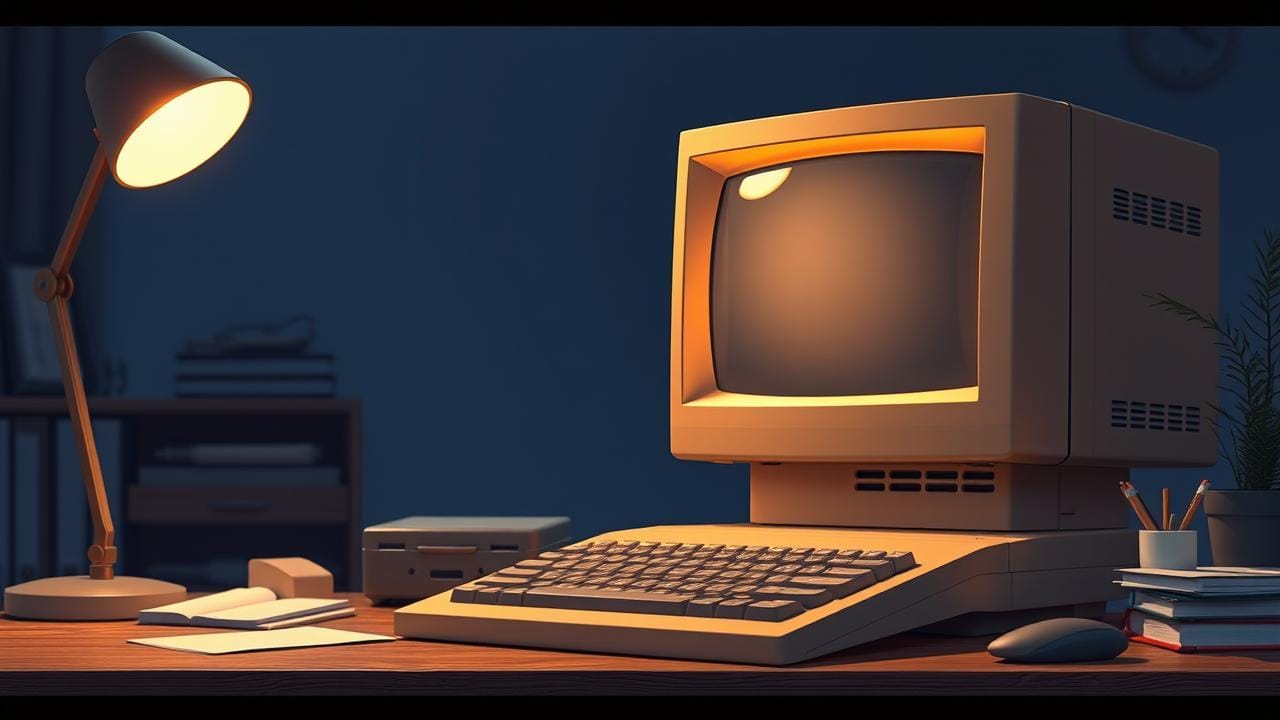
What my 386 DX40 taught me about the AI age
Looking Back

What my 386 DX40 taught me about the AI age

Christmas 1991, ninth grade. I came out of the bathroom, looked across the hall into the family room, and there it was, a 386 DX40 my parents had hidden, waiting for Christmas morning. Three decades on, the instincts that machine drilled into me are the ones I'm reaching for in the AI age.


Sid Smith Sid Smith 7 min read
Personal AI assistants: where we actually are
Personal AI

Personal AI assistants: where we actually are

Mid-2026 honest read on personal AI assistants. What actually works, what's still vapor, and where Apple, Google, Anthropic, and OpenAI land on the consumer question. The gap between the demos and the daily-driver experience is still wide, but not as wide as it was.

Sid Smith Sid Smith 6 min read
The Apple MLX path to a working assistant
Personal AI

The Apple MLX path to a working assistant

I spent a few weekends pushing a local-first assistant onto core-01, my M4 Max Mac Studio with 64GB of unified memory. The path that works is Apple MLX. Here is why I picked it over llama.cpp, Ollama, and vLLM, and what the tooling actually feels like in 2026.

Sid Smith Sid Smith 6 min read
A local-first second brain: how I built mine
Personal AI

A local-first second brain: how I built mine

The practical version of the second-brain piece, what I actually run on Apple Silicon, how notes get captured, how search and RAG work against my personal corpus, which models do which jobs, and what the daily loop feels like once it's in place.

Sid Smith Sid Smith 8 min read
The personal AI framing
Personal AI

The personal AI framing

Three years into writing about personal AI. The framing has held in the parts that mattered, bent in the parts I expected to bend, and surprised me in places I didn't see coming. Worth restating the thesis cleanly and saying where it stands.

Sid Smith Sid Smith 6 min read
Building an AI assistant that actually remembers
Personal AI

Building an AI assistant that actually remembers

Memory is the hard part of building a personal AI assistant. The model is mostly a solved problem at this point; what separates a daily-driver assistant from a glorified chat window is whether it remembers what matters and forgets what doesn't. Here's how I think about the architecture.

Sid Smith Sid Smith 8 min read
Self-hosted everything: my 2026 stack
Personal AI

Self-hosted everything: my 2026 stack

What I actually run, in March 2026, four boxes, a NAS, a small set of services, and the open-weights models that do the daily work. Practical and concrete; this is the stack as it sits, not the stack as I'd pitch it.

Sid Smith Sid Smith 6 min read
Why personal AI assistants need an ownership story
AI

Why personal AI assistants need an ownership story

Every vendor is shipping a personal AI now. Almost none of them can answer the basic ownership questions, who owns the model, the memory, the patterns. Without that story, personal AI is a marketing label on a vendor relationship.

Sid Smith Sid Smith 6 min read
Notes on building your own AI assistant: start here
Personal AI

Notes on building your own AI assistant: start here

Starter notes for the practitioner who wants to build their own personal AI in 2026. The substrate is finally ready. Hardware, model, MCP-or-not, memory, privacy boundaries, the pragmatic shape of 'if I were starting today.'

Sid Smith Sid Smith 7 min read
Privacy by design for personal AI
Personal AI

Privacy by design for personal AI

Privacy-by-design for personal AI in 2026 isn't a policy posture, it's an architecture. Local-first compute, redaction layers, scoped access, audit trails, deliberate sync. The patterns the principled-user community has converged on, written down concretely.

Sid Smith Sid Smith 6 min read
A close-up of an open leather-bound personal journal on a dark wooden desk with handwritten cursive ink visible across the pages
AI

Encoding a person: what training data should really be

Three years past the original encoding-a-person framing, the question of what data actually encodes a person has gotten clearer. The answer is less about volume and more about the specific kinds of context that compound over time.

Sid Smith Sid Smith 5 min read