

AI in the news — week of May 24, 2026
Google I/O ships Gemini 3.5, Antigravity 2.0 with a CLI that built a working OS in 12 hours, AI Mode at 1B MAU. Meta cuts 8,000 with a $21B CoreWeave bet behind it. BCG: AI data centres hit two-thirds of US home electricity by 2030. The Stratos campus moves; Florida's pipeline gets denser.

Week ending Sunday May 24. Google I/O was the tech story; the keynote on Tuesday May 19 shipped roughly what was leaked plus a couple of surprises. Meta's 8,000-job cut went live on Wednesday, with a $21B CoreWeave commitment behind it. The Boston Consulting Group dropped a number on the power story (data centres at two-thirds of US home electricity by 2030) that puts the build-out dimensions into perspective. And the Stratos campus in Utah and the Florida proposal pipeline both moved.
Google I/O 2026: Gemini 3.5, Antigravity 2.0, Code Mender, glasses. May 19.
The keynote ran two hours. The Developers Blog has the full roundup. The pieces that matter, in order of how much I'll use them.
Antigravity 2.0. The agent-first developer platform shipped with a CLI that spins up specialised subagents inside cross-platform terminal sandboxing, with credential masking and hardened Git policies built in. Google's demo built a working OS in 12 hours using 93 parallel subagents, 15K+ model requests, 2.6B tokens, and under $1K in API credits. Marketing exercise, but the cost line is the genuinely interesting number. The sandboxing and credential masking are what make this usable from inside a one-person-shop CI loop without rewriting auth flow first. This is the announcement that changes my workflow this week.
Gemini 3.5 across the consumer surfaces. AI Mode in Search at one billion monthly active users in twelve months, per Sundar's keynote post. That is the Search transition that analysts were budgeting three years for. The 1B-MAU number is the structural item this week.
Code Mender. A security tool that finds vulnerabilities and ships patches. Defender-first framing, which is the right framing. The question is whether Google ships it as widely-available infrastructure or holds it in the Cloud-tier feature set. The former is good for the long-tail open-source ecosystem; the latter is good for Google's gross margin.
Intelligent Eyewear, shipping this fall. Two configurations (audio-only, and audio plus an in-frame display) with partners Warby Parker, Gentle Monster, and Samsung. Gemini runs natively for translation, landmark recognition, equation solving. The demos were good. The privacy story for always-on cameras and microphones is still unresolved. I'll wait for the real-world deployment reviews.
Tom's Guide and Engadget both ran live blogs that are useful if you want the second-by-second.
Meta cuts 8,000, $21B to CoreWeave. May 20.
CNBC has the Wednesday rollout. The 8,000-job cut went live as scheduled, about 10% of the company, with an additional 6,000 open roles frozen. Zuckerberg memo: "Success isn't a given. AI is the most consequential technology of our lifetimes." About 7,000 employees are being moved into new AI-focused roles. The cuts landed across Reality Labs, recruiting, sales, and global operations.
The capex line is the part to read alongside the layoff. Meta has lifted 2026 capex guidance by up to $10B to $145B and committed $21B through December 2032 to AI cloud provider CoreWeave. 24/7 Wall Street framed the layoffs as a line item in the AI bill, which is uncomfortable language but accurate. The Next Web has the $56B quarterly revenue context.
The aggregate. TrueUp's tech-layoff tracker reads 142,985 cuts through this week, running at about 1,000 per day. Layoffs.fyi's narrower count is at roughly 113,000. Both methods are credible; the gap is what each counts as a "tech" company. The 2025 full-year Layoffs.fyi total was about 122,000. We will clear that with seven months to spare at the current rate.
My read. The Zuckerberg memo language is the new standard formulation across the cohort: not "AI is doing the work" but "we are not promised success, we cannot afford people we used to afford." Same structural outcome for the people losing the job, different argument about what the company is doing. The pace keeps outrunning the realistic-view forecasts, including mine.
The power story: BCG drops a number, PJM says "years, not decades"
The Boston Consulting Group published the forecast that has been making the rounds this week. AI data centres will consume the same electricity as roughly two-thirds of all US homes by 2030. Their underlying math: data-centre electricity consumption tripling from ~130 TWh in 2022 to ~390 TWh in 2030, with ~70 TWh of that increase attributed specifically to generative AI. Amazon, Google, Meta, and Microsoft are collectively spending roughly $400B per year on AI infrastructure, per Yahoo Finance's summary.
PJM Interconnection, the grid operator covering 65 million Americans from Virginia to Illinois, published a white paper this week saying it has "years, not decades" to fundamentally restructure. New CEO David E. Mills, who took the job May 1, wrote in the foreword that "the current situation is not tenable." The Register has the breakdown and TechCrunch has the operator-level primer. The price evidence: the 2025/2026 PJM capacity auction cleared at $269.92/MW-day (up from $28.92 the year before), the 2026/2027 auction hit the FERC cap at $329.17/MW-day, and the 2027/2028 auction cleared at the cap with a supply shortfall — PJM could not buy enough capacity at maximum price.
My read. The training-cluster question for 2027 is no longer chip availability; the chips will be there. The grid is the constraint, and the auction-cap-with-shortfall print is the strongest market signal of that I have seen. Expect more developers to go off-grid with on-site generation, and expect more sites to chase regions with newer transmission capacity (Texas, Wyoming, the upper Midwest) over Northern Virginia. That second move is already visible in the announced-project map; the Stratos campus below is the more dramatic version of the same pattern.
Stratos in Utah; the Florida pipeline
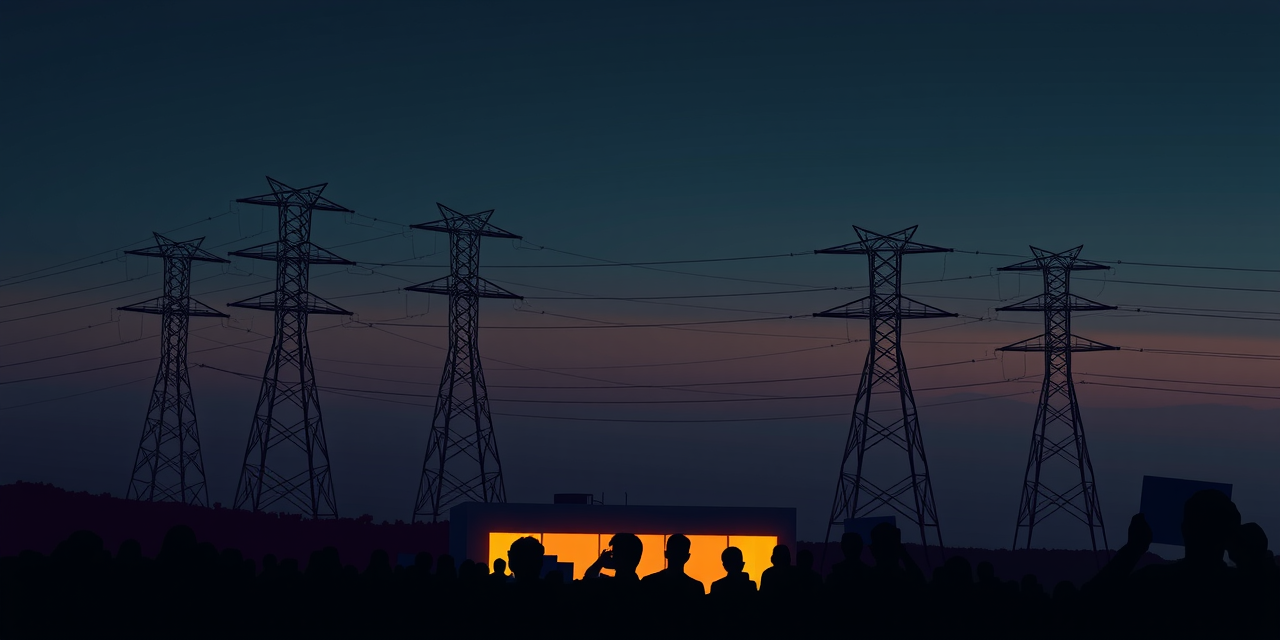
O'Leary Digital's Stratos campus in Box Elder County, Utah is the buildout to watch on the on-site-generation pattern. Tom's Hardware has the shape: 9 GW at full buildout, generated on-site from natural gas off the Ruby Pipeline, 40,000 acres of unincorporated county land plus 1,200 acres of state and military land, projected cost north of $100B over the life of the build, first gigawatt targeted within two years. The county commission approved on May 4. Demonstrations followed: a few hundred people on May 14 delivered a petition with 7,000+ signatures, and more than 600 rallied again on May 23. Utah News Dispatch has the coverage. I'll watch whether construction proceeds at the spec the developer is pitching, and whether the on-site-gas model gets replicated by other developers facing grid-queue bottlenecks.
Florida's pipeline keeps getting denser. Fox 13 Tampa Bay reports Fort Meade in Polk County approved a $2.6B, 4.4 million-square-foot data centre on April 15, developer Stonebridge, on former phosphate land, with a 20-year development agreement and a $150M tax break. Project Tango in Palm Beach County (202 acres near Loxahatchee) had its zoning hearing postponed from April 23 to July 15 for additional impact studies. Active proposals across at least seven more counties are tracked on floridadatacenters.org. State-level coverage: Florida Phoenix has a bill explainer.
Rack-level power is its own story
The substation is one half of the power story; the rack is the other. Compute Forecast has the trend lines: industry-average rack density at 27 kW in 2026, a 69% year-on-year jump, driven by NVIDIA Hopper and Blackwell deployments. The latest GB200 racks pull 132 kW fully loaded. Next-gen NVIDIA platforms keep moving the ceiling: Vera Rubin Ultra projected at 600 kW per rack, Feynman Ultra at 1.2 MW per rack by 2029. Liquid cooling is now the default for AI deployments, not the upgrade. Tech Zine has the forward look out to 4 MW per rack and the high-voltage shift that makes those numbers possible.
My read. The political opposition lives at the substation and the watershed. The capability problem lives at the rack. Every additional kilowatt of rack density compresses the timeline at the substation end of the wire, which is the squeeze PJM is reporting at the auction.
Smaller items
- AI Mode in Search hit 1B MAU in 12 months, per Sundar's I/O post — the structural Search-transition number.
- Antigravity 2.0 CLI ships with the credential masking and Git policies that make agent platforms usable in production CI loops.
- NVIDIA Vera Rubin Ultra projected at 600 kW per rack; Feynman Ultra at 1.2 MW by 2029.
- Stonebridge's Fort Meade build broke through despite 40 of 41 public commenters opposed.
- The Deseret News has a running tracker of state-level data-centre moratoriums and ballot initiatives — useful as site-planning context.
Looking ahead
WWDC is June 8, so Apple's on-device-AI story starts landing in next week's roundup. The first wave of teams trying Antigravity 2.0 + the CLI in production should produce real-world reads by Friday. Project Tango's July 15 hearing is the next big data-centre vote. The power-supply story keeps growing — I expect it stays in the rotation for several months.
Sources
- Google I/O 2026 — Developers Blog roundup, Sundar's keynote post, Tom's Guide live blog, Engadget live blog.
- Meta layoffs + capex — CNBC: Zuckerberg memo, 24/7 Wall Street: $145B AI bill, The Next Web: $56B revenue context, SF Standard: Meta morale.
- Layoff aggregates — TrueUp tracker, Layoffs.fyi.
- Power and grid — BCG: solving the data-centre power crunch, Yahoo Finance: AI data centres + $400B capex, The Register: PJM grid reality, TechCrunch: PJM under strain.
- Utah Stratos — Tom's Hardware: project overview, Utah News Dispatch: May 23 rally, Utah News Dispatch: May 14 rally + petition, CNN: project + opposition, KUER: county vote.
- Florida pipeline — Fox 13: Fort Meade approval, CW34: Project Tango delay, Florida Phoenix: bill explainer, floridadatacenters.org.
- Rack-level density — Compute Forecast: rack density trends, Tech Zine: 4 MW per rack outlook, Substack: 1 MW rack milestone.
- State tracker — Deseret News moratoriums and ballot initiatives.