

Cluster of one: building an at-home AI stack worth keeping
Most home AI setups die after the novelty wears off. The ones that survive into year two share a small set of operational properties, boring, durable, owner-friendly. Worth being explicit about what makes a stack worth keeping rather than just worth building.

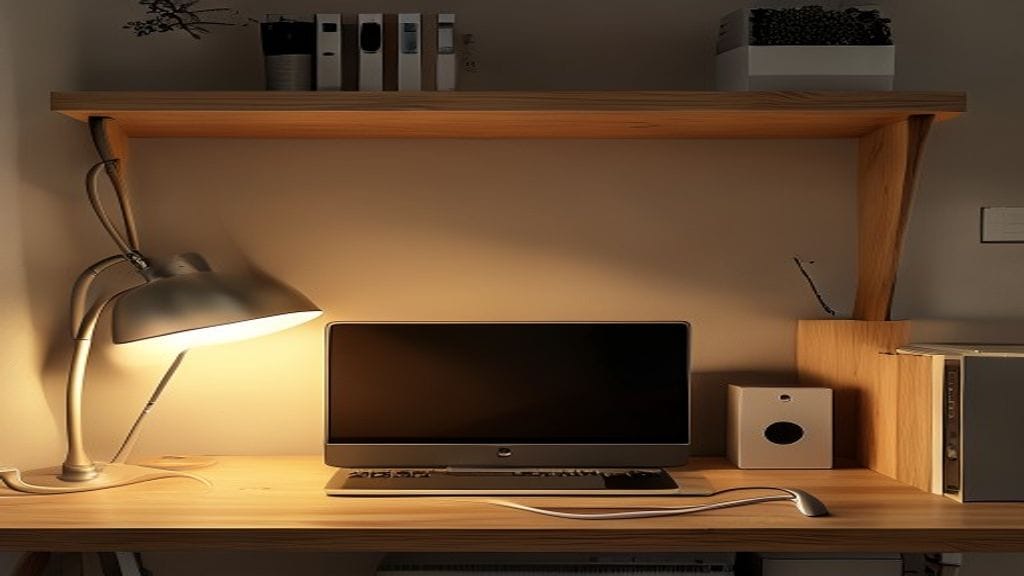
The home AI setup most people build doesn't make it past the novelty phase. The hardware sits on a shelf. The services drift out of date. The personal AI assistant that was supposed to be daily-use becomes a thing you remember to use occasionally. The honest version of "I built a home AI stack" eventually means "I built one and abandoned it."
The ones that survive (into year two and beyond) share a small set of properties. They're boring. They're owner-friendly. They get used because using them is easier than not using them. Worth being explicit about what makes a stack worth keeping rather than just worth building, because the failure mode is more common than the success mode and the difference is mostly about a handful of operational choices.
I'm not new to building this kind of thing. About nine years ago I built engine-01, a workstation designed to handle both AI and VR workloads at a time when neither was reasonable on local hardware (and neither was really a category yet, exactly). It runs today. It's dated for the times. It made it past the abandon-phase by a wide margin, which has me thinking about why.
The Mac Studio cluster I run now is a different shape (smaller, quieter, more energy-friendly, more capable for the AI half of the workload) and yet the operational story is the same. The stack survives because it's boring and owner-friendly, not because it's clever. The cleverness was in the buying decision. Everything after that has been routine maintenance, the kind a busy person can actually keep up with.
What separates the keepers from the abandons
A few patterns I've watched play out across my own setup and across the home setups of others:
Single point of contact. The keepers have one obvious thing the user opens every day, a chat surface, an assistant in the menu bar, a CLI command. The abandons have many ways in, none of them prominent, and the user defaults to whatever cloud assistant happens to be open in another tab.
Boring foundation. The keepers run well-understood components. Postgres for state, Caddy or nginx for routing, systemd or launchd for service management, Synology DSM for storage. The abandons run the cool new thing that was on Hacker News, which gets abandoned by upstream within six months.
Owner-friendly maintenance. The keepers can be operated by the person who built them with a few hours of attention per quarter. The abandons require a few hours per week, which the owner doesn't sustain past month three.
Useful failure modes. The keepers degrade gracefully, a single service down doesn't break everything, the user gets a clear message about what's working and what isn't. The abandons fail in confusing ways that take an hour to debug each time.
Coherent backup story. The keepers have one backup strategy that covers everything important and runs without thinking about it. The abandons have backups for the obvious things and don't realize what's missing until the SSD dies.
No operational secrets. The keepers can be picked up by a competent friend and operated for a week if the owner is on vacation. The abandons have undocumented quirks that only the owner knows.
These aren't exotic principles. They're the same operational principles that make any infrastructure sustainable. The reason home AI setups specifically struggle with them is that the home AI category is novel enough that the operational discipline hasn't propagated.
The shape of a stack worth keeping
A concrete description of the home AI stack that's been worth keeping for me, as a counterpoint to the failure modes:
One Mac Studio (M4 Max, 64 GB) doing inference. Models run via MLX or Ollama. Endpoint exposed at a stable local URL that everything else points at.
One Mac mini (M4, 16 GB) running the always-on lighter services. TTS, transcription, OCR, embeddings. Each as a launchd service that auto-restarts.
One Synology NAS with the storage and the platform services (Forgejo for git, n8n for workflow automation, a small CI runner). Snapshots configured. Off-site backup configured. Disk health monitored.
One MacBook Pro as the workstation. Offline fallbacks for the assistant when not on the home network. The 4 TB SanDisk Pro M.2 attached for working storage.
A small inference gateway as the single point of contact, runs on the Studio, presents an OpenAI-compatible API, routes requests to the right backend based on the workload, captures audit logs, applies the policy decisions.
A monitoring layer, small Grafana on the NAS, alerts to Discord when something is wrong. Watches the inference endpoint, the platform services, the NAS health, the UPS state.
A backup-and-snapshot routine. Synology snapshots for the NAS, Time Machine for the Mac workstations, off-site replication for the irreplaceable parts. Tested quarterly with a real restore exercise.
That's the keepers list. None of it is novel. The novel thing is that it's all running together, doing useful work, without requiring constant attention.
Maintenance rhythm that holds up
The schedule that keeps this sustainable:
Daily, nothing. The system runs. The user uses it.
Weekly, quick check on the monitoring dashboard. Maybe 5 minutes. Look for anything trending wrong. Restart anything that needs restarting. Most weeks: nothing.
Monthly, model updates if relevant. New release of the workhorse model? Update on a quiet evening. Test the new version against the existing one for the workloads that matter. Roll forward or back based on the comparison. Maybe 1-2 hours.
Quarterly, backup restore exercise. Pick a snapshot, restore to a test location, verify it actually contains what it should. Check the off-site backup is current. Audit the security perimeter. Maybe 4 hours.
Annually, bigger architectural review. What workloads grew? What workloads shrank? Is the foundation still right for what you're actually doing? Capacity planning for the next year. A weekend's worth of attention, if that.
That's the rhythm. The total time investment is on the order of 50-100 hours per year for a stack that's running most of your AI work. Compared to the time the assistant saves on actual work. It's a positive ROI by an obvious margin.
What kills home AI stacks
The failure modes worth being explicit about, because they're predictable:
Premature optimization. Building the elaborate scaffolding for a use case the user doesn't actually have. Microservices, k8s, custom orchestration. The stack collapses under its own complexity before it gets to do useful work.
Tracking bleeding edge. Constantly upgrading to the latest model, the latest framework, the latest agent SDK. Every upgrade breaks something. The owner spends more time fixing breakage than using the stack.
Underestimating the backup story. The disk dies, the SSD wears out, the cloud-sync silently stops. A year of accumulated personal context disappears because the backup was assumed rather than verified.
Letting services drift. The platform services on the NAS get behind on patches; eventually one breaks; the broken one cascades; the whole stack is unreliable. Routine maintenance prevents this; lack of routine maintenance accumulates breakage.
Single-user fragility. The setup works because the owner knows the workarounds. When the owner is sick or on vacation, nobody else can keep it running. Family members or partners give up trying.
Cost creep nobody noticed. Cloud components added incrementally without revisiting the bill. Six months later the "free home AI setup" is costing $200/month nobody's tracking.
These all happen. They don't have to. Each one has a small specific prevention, write the runbook, set the patch reminder, run the backup test, document the workarounds, audit the bill quarterly. None of it is exotic; all of it requires the discipline that the novel-tech category often skips.
The honest summary
A home AI stack worth keeping is mostly an exercise in operational discipline borrowed from other infrastructure categories. The hardware is the easy part. The model is the easy part. The discipline that keeps the stack running for years is the part that separates the keepers from the abandons.
The home-lab buyer's guide covers what to buy. The why-I-built-my-cluster piece covers the rationale for owning the hardware. This piece is about the layer above both, the practices that make the investment compound rather than depreciate.
Cluster-of-one isn't a brag about the hardware. It's a description of the operational scope, one user, one set of workloads, one stack to maintain. That scope has its own discipline. The discipline is gettable. Most setups skip it. The ones that don't survive into year two and beyond.
A year in, my own setup is in the keepers category. Year two will tell whether the discipline holds. The bet is yes; the work to make that true is mostly already in the routine.