


Prompts as code: versioning, A/B, rollback
Prompts in git, versioned, A/B-tested via feature flags, rollback when regressions hit. The single most-edited surface in an AI product needs the same discipline as code.
For small teams and small organizations — frugal stacks, team-of-one governance, small-shop AI
Prompts in git, versioned, A/B-tested via feature flags, rollback when regressions hit. The single most-edited surface in an AI product needs the same discipline as code.

Triage is cheap and fast. Diagnose is slow and smart. Resolve is gated by a human until it isn't. The three loops of an AI product, with different cost profiles and different SLAs.

Your consultant's body of work is the retrieval corpus. Embeddings, chunking, hybrid search, the prompt template that pulls in the right context, this is the surface that earns the bill.

One Postgres for both your relational data and your embeddings. Secrets in Secrets Manager. Encryption on by default. The MVP-grade data layer that doesn't need a forklift later.
The cheapest day-one decision is also the most expensive one to defer: auth, tenant scoping, and row-level security wired in before you have a single customer.

mflux, ollama/mlx-lm, fine-tuning, whisper, a batch runner, what runs on the desk, and the math on why it pays for itself in months.
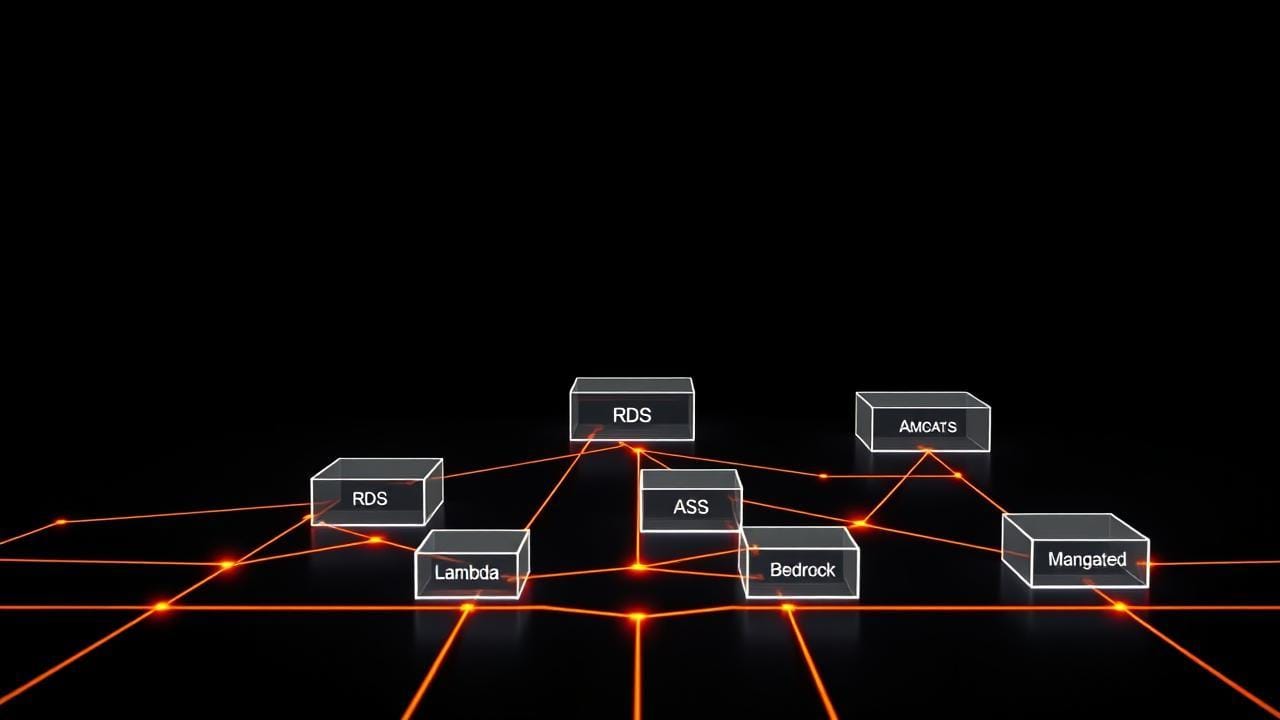
API Gateway, Lambda, Cognito, RDS+pgvector, Bedrock, S3, EventBridge, SQS, CloudFront, CloudWatch. The smallest cloud shape that actually ships.

Customer-facing belongs in the cloud. Training, batch, and eval belong on the desk. Here's why running both costs less and works better.

Captured judgment is not a model and it's not a knowledge base. It's the small set of things the consultant has personally learned from being wrong.

Most AI MVPs over-build the model and under-build the product loop. Here's the question that fixes that, and the eighteen pieces that follow it.

What I'd actually give a 5, 50 person org getting serious about AI in mid-2026. A hosted+local hybrid stack, the governance scaffolding to make it safe, and the cost numbers I'd budget against. Concrete picks, not a vendor matrix.

Sub-100-person organizations have different AI procurement constraints than enterprises, tighter budgets, less vendor leverage, less in-house governance, often more sensitive data. Here's the procurement frame that actually fits the shape of those orgs.